On this page
Snack time is the whole story on this panda eating bamboo coloring page. A chubby panda leans back against a big mossy rock with its eyes shut in pure joy. One paw lifts a leafy stalk to its open mouth, and the other paw keeps a spare stalk ready on its lap. Two more stalks wait on the ground, in case it gets hungry again in five minutes.
The panda fills most of the sheet, so the shapes are large and easy to stay inside. Kids from 4 to 10 will do well here. Expect about 20 minutes, or longer if your child wants to color every stem in the grove behind the bear.
Coloring the panda's black and white fur
Begin with the white parts, which means doing almost nothing. Leave the head and belly as clean paper and move on. The dark parts are the ears, the two eye patches, the arms, the legs and the wide band across the chest. Save those for last, because black crayon smudges onto anything your hand touches.
The arms sit on top of the chest band, and they all go dark. So how do you keep them apart? Use black on the arms and a slightly softer dark gray or navy on the band. The outline will still show, and the arm will seem to come forward.
The soles of the feet are a nice break from all that dark fur. Give the toe pads and the big pad a soft pink or a warm tan. Inside the ears, a dark brown looks more natural than bright pink.
Panda eating bamboo coloring page ideas
This page has a lot of green, and using just one crayon will make it feel flat. Pick a few shades and give each job its own color:
- Pale mint for the far stems, so they fade into the distance
- Bright green for the stalks the panda is holding
- Deep green for the leaves and the rings on each stalk
- Yellow green for the grassy hill at the bottom
The rock is a good spot to play. Gray works, of course, but dabs of green on top make it look mossy. Try a light blue sky between the stems, then press harder near the top edge of the page.
That pink mouth is tiny but it matters. A bit of rose color inside draws the eye right to the bite of bamboo. If you have a white gel pen, add one small dot on the wet nose after everything else is done.
What real pandas eat
According to National Geographic Kids, bamboo makes up 99 percent of a panda's diet. The rest is other plants, plus a fish or small mammal once in a while. Pandas spend about 12 hours a day eating, and they may get through up to 15 percent of their body weight in that time.
Twelve hours is half of a whole day. Ask your child what else could fit into that much time, like school, soccer practice and dinner, all put together.
A lunchbox math game
Here is a quick way to turn that fact into a game. Have your child weigh a backpack or a bag of apples at home. Then work out 15 percent of the weight together, or just talk about one tenth for younger kids. A panda eats a big share of its own weight each day, and the math makes that easy to picture.
You can also count every leaf in the drawing and write the number on the back. Whoever finds the most wins the right to pick the next page.
Keep the panda party going
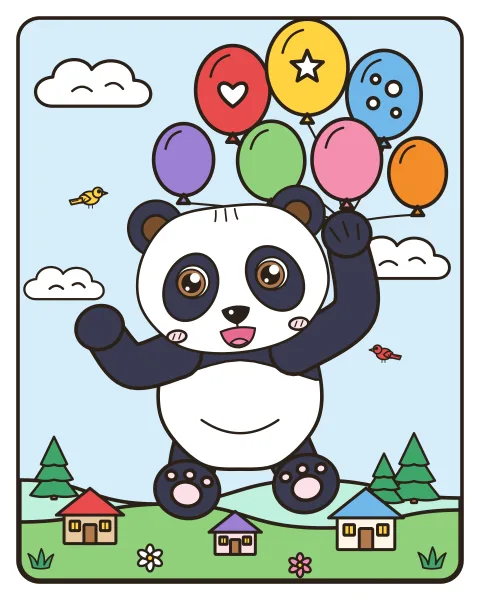
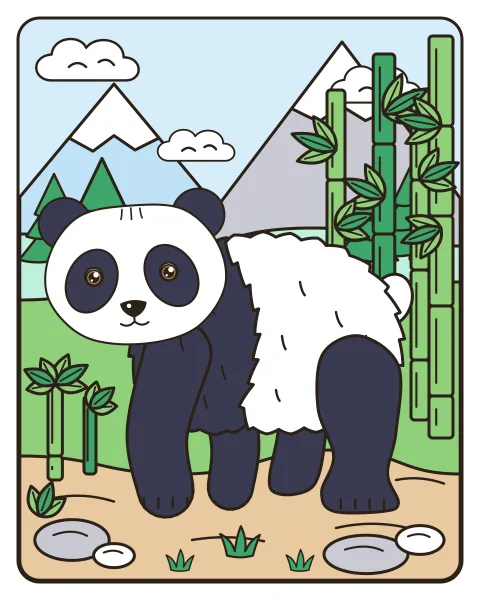
Kids who like this bear can also try the kawaii panda coloring page, which has huge shiny eyes. For a more true to life look, the giant panda coloring page shows an adult on a mountain trail.
Questions
How can I tell the arms from the black chest band?
Each arm has its own outline. Use black on the arms and a softer dark gray or navy on the band, and the arms will seem to sit in front.
Why are the panda's eyes closed?
It is enjoying its snack. Closed eyes also make the page easier for young kids, since there are no tiny eye details to color.
Can this page work for a nature lesson?
Yes. Pair it with a talk on what animals eat, then have students count the leaves or write a sentence about how much time a panda spends eating.